
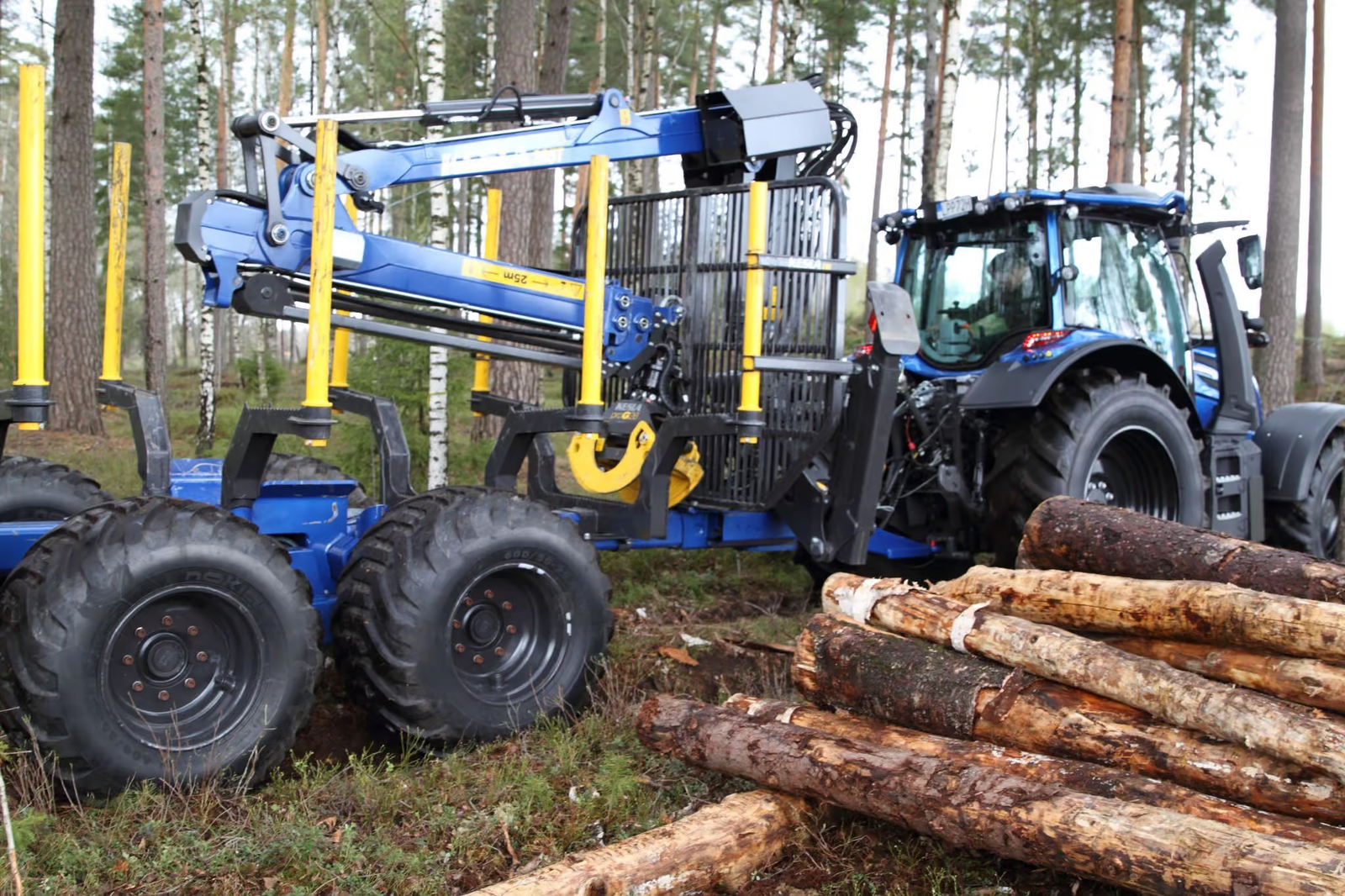
A log loader trailer can make demanding timber work more organized by combining transportation and loading capability in one practical setup. Whether logs need to be collected from a woodlot, moved around a property, or prepared for further processing, having suitable equipment reduces unnecessary manual handling. For operators dealing with timber regularly, choosing the right trailer can improve workflow, safety, and overall productivity.
Why a Log Loader Trailer Is Useful
Moving logs presents challenges that ordinary utility trailers are not designed to handle. Logs are heavy, irregularly shaped, and difficult to position safely. A log loader trailer provides a purpose-built platform for carrying timber while allowing the operator to manage loading more efficiently.
Instead of relying entirely on separate loading machinery, operators can use the trailer’s handling system to pick up and position material. This can be particularly valuable in remote woodlots where bringing additional equipment may be inconvenient.
A well-planned log loader trailer also helps reduce repeated handling. Once timber is collected, it can remain on the trailer until reaching the unloading location.
Better Control During Loading
Control matters when working with long or heavy timber. A log loader trailer allows logs to be positioned more deliberately instead of being moved manually or pushed into place using unsuitable equipment.
Balanced loading is equally important. Keeping the load distributed correctly can improve towing stability and make transportation more predictable.
Features Worth Considering
Not every log loader trailer is suited to every operation. Buyers should consider the size and type of timber they normally handle before choosing equipment.
Payload capability deserves particular attention. The trailer should be appropriate for the expected working load rather than merely the occasional light job.
The frame and structural components should also be suitable for forestry environments. Rough ground, repeated loading, vibration, and changing weather can place significant stress on equipment.
Hydraulic operation is another important consideration. A responsive handling system can help operators position logs accurately and maintain a steady working rhythm.
Terrain and Maneuverability
Woodlots rarely provide smooth working surfaces. Mud, uneven tracks, slopes, roots, and confined spaces can all influence equipment performance.
A log loader trailer intended for woodland use should provide suitable stability and ground clearance. Maneuverability is also valuable when collecting logs from narrow access areas.
Operators who understand their terrain can choose equipment that fits actual working conditions rather than selecting solely according to maximum capacity.
Improving Daily Timber Operations
Efficiency is often created through small improvements. Positioning the log loader trailer strategically before beginning work can reduce unnecessary machine movement.
Logs can also be organized before loading. Grouping timber according to size or destination may simplify loading and unloading.
Routine inspections should become part of the working day. Checking tires, connections, hydraulic components, structural areas, and load restraints helps identify potential problems before they interrupt operations.
Operators seeking forestry equipment information and local assistance can also benefit from understanding how trailer specifications relate to their particular timber-handling requirements.
Safety Should Remain a Priority
No productivity gain is worth unsafe operation. A log loader trailer should always be used within its stated operating limits.
Operators should maintain appropriate clearance from suspended logs and ensure that bystanders remain outside the working zone. Loads must also be secured correctly before transportation.
Uneven ground requires additional attention because trailer position can affect stability during loading.
Choosing Equipment for Long-Term Use
A trailer should fit the operation rather than forcing the operation to adapt around unsuitable equipment. Consider typical log diameter, length, working terrain, towing requirements, and expected frequency of use.
For frequent forestry work, durability and straightforward maintenance can be just as important as loading performance.
The best equipment decisions usually come from evaluating the entire workflow. Think about where timber is collected, how it is loaded, the distance it travels, and how it will eventually be unloaded.
Conclusion
For woodlot owners, forestry operators, and timber-handling crews, a log loader trailer can simplify the process of collecting, loading, and transporting logs. Suitable capacity, stable construction, practical maneuverability, and careful operating habits all contribute to dependable performance. By selecting equipment around real working conditions and maintaining it properly, operators can build a safer, smoother, and more productive timber-handling routine.