
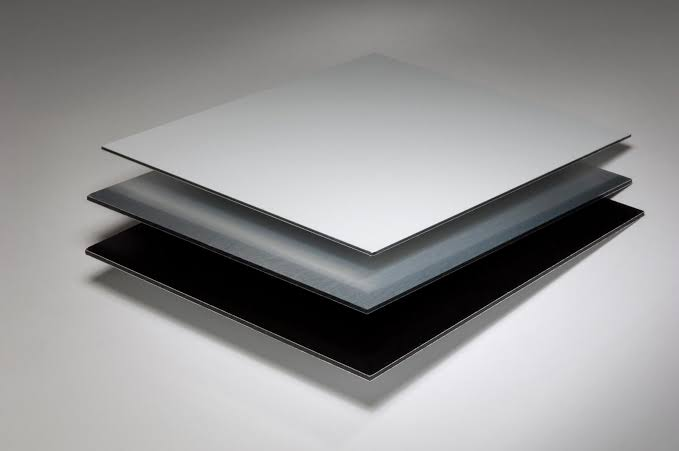
A striking façade often appears simple from a distance. Clean surfaces, aligned joints, sharp corners, and balanced proportions can make the exterior seem effortless. In reality, achieving that simplicity requires detailed planning. An ACM aluminum composite panel offers the flexibility needed for modern architectural forms, but the quality of the final elevation depends heavily on how individual details are resolved.
Understanding those details helps designers and contractors turn conceptual geometry into a consistent built result.
Begin With Panel Proportions
Panel dimensions influence the visual scale of a building. Large modules can create broad, calm surfaces, while smaller modules introduce more frequent joint lines and stronger visual rhythm.
Neither approach is automatically better.
The appropriate ACM aluminum composite panel layout should respond to the architecture, openings, building proportions, and fabrication requirements.
Align Panels With Important Features
Windows, doors, floor lines, corners, and entrances provide natural reference points for panel joints.
When joints align with these elements, the façade often feels organized. Random interruptions, by contrast, can make even a carefully selected finish appear less refined.
Corners Need Deliberate Design
Corners are among the most visible areas of any panel façade. They show how two elevations meet and often reveal the quality of fabrication and installation.
Designers should determine corner strategies early rather than treating them as field adjustments.
The flexibility of an ACM aluminum composite panel can help create crisp transitions, provided fabrication dimensions and attachment requirements are properly coordinated.
Openings Create Complex Interfaces
Windows and doors interrupt the primary wall surface. Their heads, jambs, and sills therefore require careful consideration.
Maintain a Consistent Visual Relationship
Panel joints around openings should follow a logical pattern. Narrow leftover pieces or awkward changes in alignment can distract from the intended composition.
At the same time, these interfaces must support the complete wall design, including moisture-management and transition requirements.
Architectural appearance and envelope performance should be developed together.
Recesses and Projections Add Depth
Flat elevations can become more dynamic when architects introduce projecting volumes, recessed sections, canopies, or framed features.
Composite panels are well suited to such geometric approaches because they can be fabricated for multiple surface conditions.
However, every change in plane creates additional interfaces. These locations should be detailed clearly so installers understand panel relationships and sequencing.
Joint Consistency Matters
Panel joints are repeated hundreds or even thousands of times on larger projects. This repetition makes inconsistencies easy to notice.
Accurate fabrication and controlled installation are essential.
Establish Reliable Benchmarks
Installation crews should work from verified reference lines instead of relying solely on adjacent panels. This prevents minor errors from accumulating across long elevations.
Regular checks help preserve horizontal and vertical alignment as work progresses.
Protect the Finish During Construction
A finished façade can be affected by surrounding construction activities. Dust, debris, tools, sealants, and other materials may come into contact with exposed surfaces.
Work sequencing and appropriate handling procedures can help protect panels.
Cleaning methods should also be suitable for the selected finish. Aggressive or inappropriate techniques may affect surface appearance.
Review the Façade as a Whole
Quality assessment should happen from multiple viewing distances. Close inspection reveals individual details, while distant viewing shows whether the overall panel grid and building proportions work as intended.
This broader perspective is particularly important on elevations with strong geometric patterns.
Conclusion
An ACM aluminum composite panel provides architects with substantial freedom, but refined façades are created through disciplined detailing rather than material choice alone. Panel proportions, corners, openings, joints, transitions, fabrication tolerances, and installation benchmarks all influence the finished appearance. Addressing these elements early allows design intent to survive the transition from drawings to construction. With careful coordination and accurate execution, composite panels can create exterior surfaces that feel clean, purposeful, and architecturally unified.